UPMC Physician Resources
Pitt Cancer Institute Researchers Say Decoy Shows Promise as Cancer-Fighter in Novel Phase 0 Trial
- Comments Off
- Email to friend
- Blog it
- Stay updated
Life Expectancy Increasing for Type 1 Diabetics, According to Latest Pitt Research
Brian J. Druker, M.D., Will Receive Pitt’s Dickson Prize at Science 2012— Translation
- “Sustainable Energy Innovators: Moving Toward a Low-Carbon Future” presented by Miranda A. Schreurs, Ph.D., director of the Environmental Policy Research Centre and professor of comparative politics at the Freie Universität Berlin. Dr. Schreurs specializes in science and politics, and her work focuses on comparative environmental politics and policy in the U.S., Europe, and East Asia.
- “Riboswitches: Biology’s Ancient Regulators” presented by Ronald R. Breaker, Ph.D., chair of the Department of Molecular, Cellular and Developmental Biology at Yale University and a Howard Hughes Medical Institute investigator. As a postdoctoral researcher at the Scripps Research Institute, Dr. Breaker pioneered a variety of “test-tube evolution” strategies to isolate novel RNA enzymes and was the first to discover catalytic DNAs or “deoxyribozymes” using this technology. He co-founded Archemix, a biotechnology company that developed engineered RNA sensors and aptamers for therapeutic applications, and cofounded BioRelix, a biotechnology company developing antibiotics that target bacterial riboswitches.
- “Optogenetics: Development and Application” presented by Karl Deisseroth, M.D., Ph.D., an associate professor of bioengineering and psychiatry at Stanford University and a Howard Hughes Medical Institute early career scientist. Dr. Deisseroth pioneered the development and application of optogenetics, a technology that uses light to control millisecond-precision activity patterns in genetically defined cell types within the brains of freely moving mammals.
Urine Test Can Indicate a Woman’s Risk of Bone Fracture, Pitt Study Finds
Pitt Researchers Pinpoint Peptide that Blocks Hepatitis C Virus Entry
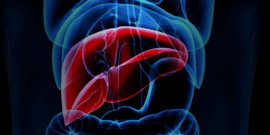
Pitt Researchers Developing Liver and Joint “Tissue Chips” to Better Predict Drug Safety
- 3-D Micro-Liver: D. Lansing Taylor, Ph.D., Allegheny Foundation Professor of Computational and Systems Biology, and director, University of Pittsburgh Drug Discovery Institute, will lead a team at Pitt and Massachusetts General Hospital to create a three-dimensional microfluidic structure made entirely of human cells that will mimic the acinus, the smallest functional unit of the liver. The team also will develop a panel of sentinel “biosensor cells” that will indicate liver toxicity with exposure to different drugs.
- The current gold standard of testing is not very gold,” Dr. Taylor said. “In humans, the liver plays a key role in processing drugs, and many experimental agents have failed in the late stages of human testing because preclinical studies didn’t predict their impact on the liver, along with other organs. This project aims to solve that problem so that we have greater success in drug discovery and development.”
- 3-D Micro-Arthritic Joint System: Rocky Tuan, Ph.D., the Arthur J. Rooney Sr. Professor of Sports Medicine and executive vice chair for research, Department of Orthopaedic Surgery, will lead a team to create a tissue chip that includes stem cell-produced bone and cartilage cells that simulate joint surfaces to better understand how arthritis develops and how to prevent it.
- This system will allow us to explore the effects of not only inflammatory molecules and the wear-and-tear of aging on the entire joint, but also mechanical injuries, such as a hit or a sprain, both immediately and over time in molecular detail, which is not feasible with existing techniques,” said Dr. Tuan, who also is director of the Center for Military Medicine Research, director of the Center for Cellular and Molecular Engineering in the Department of Orthopaedic Surgery, and co-director of the McGowan Institute for Regenerative Medicine.
According to NIH, the Tissue Chips program is the result of collaboration between NIH, the Defense Advanced Research Projects Agency (DARPA) and the U.S. Food and Drug Administration, and was established by the NIH’s Common Fund and the National Institute of Neurological Disorders and Stroke.
“Serious adverse effects and toxicity are major obstacles in the drug development process,” said Thomas R. Insel, M.D., NCATS acting director. “With innovative tools and methodologies, such as those developed by the Tissue Chips program, we may be able to accelerate the process by which we identify compounds likely to be safe in humans, saving time and money, and ultimately increasing the quality and number of therapies available for patients.”
Drs. Taylor and Tuan’s projects also will receive support from the University of Pittsburgh Clinical and Translational Science Institute.